Interior's Third Wave: Another Deferred Resignation Push at a 20%-Cut Agency
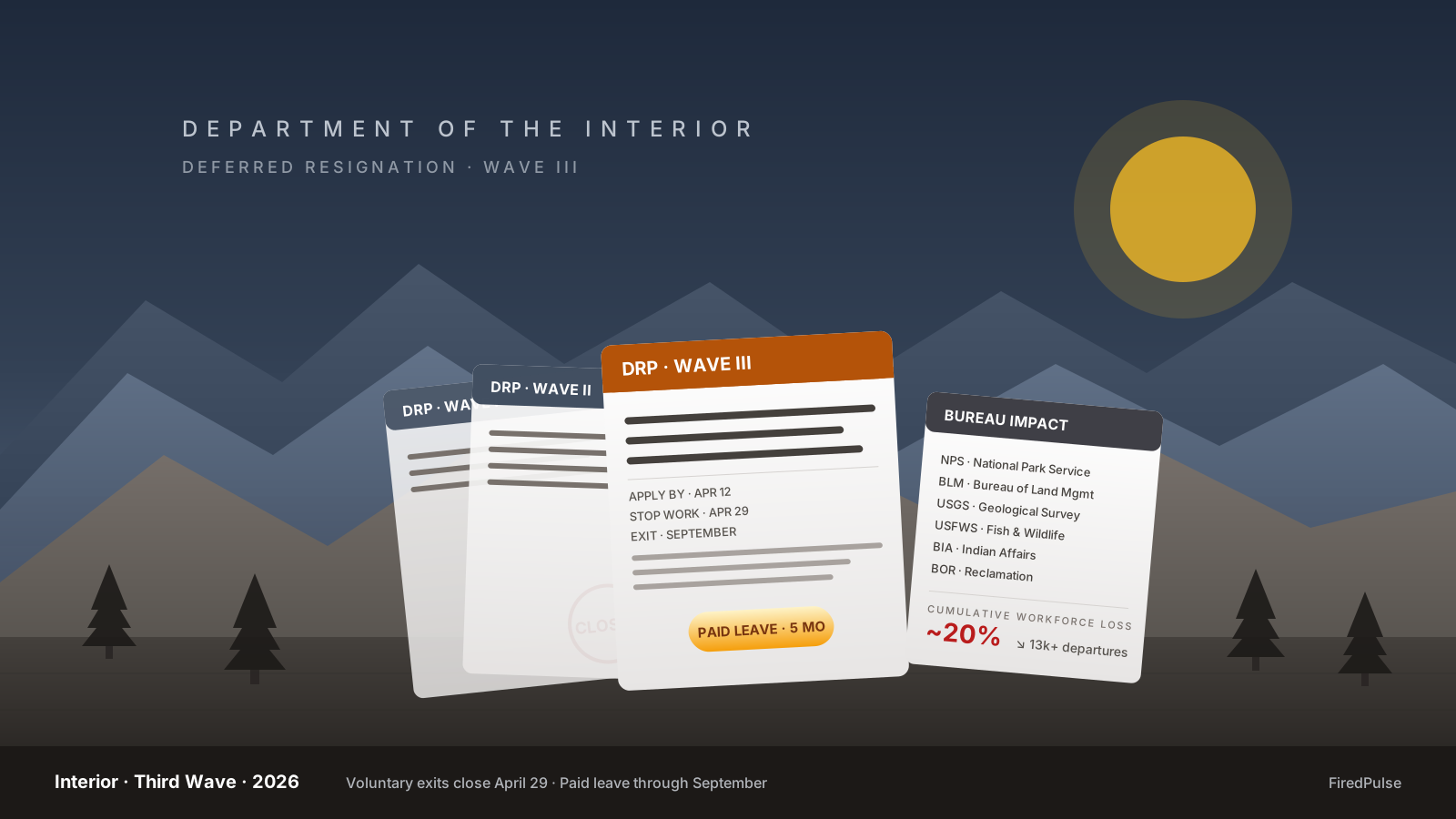
The Interior Department has quietly become the first major civilian agency to roll out a third round of its Deferred Resignation Program in twelve months. With the application window closing earlier this month and the last paychecks for active work going out April 29, Interior's headcount is about to contract again at an agency that has already shed roughly 20% of its workforce since early 2025.
What Interior Just Offered
According to reporting from Government Executive and Federal News Network, the third-wave offer opens the door to nearly all of Interior's full-time employees. Those who signed on had until April 12 to apply, must stop performing duties by April 29, and can then sit on paid administrative leave through the end of September before formally exiting government service.
Internally, leadership is framing the program as the voluntary alternative to forced reductions. During a staff visit in Denver this week, Secretary Doug Burgum reportedly told employees that involuntary RIFs are no longer on the table. That is a meaningful message inside a department where the first two DRP waves pushed out roughly 13,000 employees, and where rumors of bureau-level layoffs have circulated since last summer.
Who's Actually Affected
The Interior Department is not one agency — it is a federation of bureaus, and the DRP is landing across all of them. That includes the National Park Service, Bureau of Land Management, U.S. Geological Survey, Bureau of Indian Affairs, Fish and Wildlife Service, Bureau of Reclamation, and the Office of Surface Mining Reclamation and Enforcement. Employees in these bureaus range from field scientists and wildland firefighters to GS-13 and GS-14 program managers, contracting officers, and IT leads who were consolidated into Secretary Burgum's office during the 2025 reorganization.
For employees who took the offer, the near-term reality is a five-month paid leave window that functions almost exactly like a runway for job search. For those who declined, the working assumption is that attrition plus the third-wave exits will close enough gap that further RIFs become unnecessary — at least for now.
Why This Matters Beyond Interior
Interior's third wave is a bellwether. If the agency can hit its headcount target without a formal RIF, other departments watching for a cheaper, less litigious path to staff reduction will pay attention. The Voluntary Separation Incentive Payment (VSIP) and Voluntary Early Retirement Authority (VERA) tools were designed for exactly this kind of soft landing, and the DRP has effectively become a third lever layered on top of them.
The counterargument, which Congress continues to make, is that these programs are expensive. A recent Federal News Network analysis pegged the total cost of DRP paid-leave across agencies at roughly $4.5 billion — a non-trivial line item for what is, in practice, paying people to not work. Expect another round of oversight hearings before FY27 appropriations move.
The Labor Market Implication
From a hiring-market perspective, the Interior wave produces something unusual: a concentrated cohort of experienced federal professionals, on paid leave through September, actively available for interviews and start-date negotiations. Unlike a RIF, where employees are often scrambling to close out responsibilities, DRP participants have bandwidth — and most of them know that the job search gets harder the longer they sit on a gap.
The talent profile is varied but predictable. Interior skews heavily technical and operational: grant and acquisition officers who have managed programs at scales private companies rarely see, geospatial analysts and scientists trained on datasets most vendors license from Interior bureaus, infrastructure and facilities staff who kept national parks and federal buildings running through every recent political transition. For environmental consultancies, land-management tech companies, outdoor-recreation employers, energy firms, and federal systems integrators, this is a rare recruitment window.
Practical Steps If You Took the DRP
- Lock down your paperwork now. SF-50s, performance reviews, position descriptions, and any training certificates should be downloaded before your access is revoked on April 29 — not after.
- Protect your clearance if you have one. Many Interior roles carry a Public Trust or Secret clearance. Know your crossover window and communicate it clearly to hiring employers; a continuous-eligibility clearance is one of your most transferable assets.
- Translate your work into private-sector language. “Managed a $240M cooperative agreement portfolio across 19 state partners” lands differently than “served as grants officer for X bureau.”
- Don't wait until September. The paid-leave window is a gift, but the market treats a long gap as a red flag. Start conversations now, even if you're not ready to sign.
- Talk to a benefits counselor. FERS, TSP rollover options, FEHB conversion, and the tax treatment of severance-style payments all have choices that are easier to make before you're off-rolls.
What Employers Should Be Doing This Week
The window for hiring out of the Interior cohort is narrow. Applications closed April 12 and access expires April 29. In practice, that means most of these candidates are refreshing their resumes the first week of May. Firms that wait to advertise until June will be looking at the candidates nobody else hired first.
The employers moving fastest are doing three specific things: rewriting job descriptions so they map cleanly to Interior bureau titles (Park Manager, Bureau Chief, Realty Specialist, Grants Management Specialist), dropping the rigid “X years in industry” filter that screens out career feds, and pulling first interviews forward to within two weeks of application. In our experience, that last one — compressing the interview cycle — is the single biggest determinant of who actually lands the hire.
The Bigger Pattern
Interior's third wave fits inside a broader story we've been tracking: the shift from involuntary, litigation-heavy RIFs toward voluntary-exit programs that achieve similar headcount outcomes without the political and legal cost. Treasury, State, and several Defense-side civilian components are watching closely, and internal readiness documents in multiple agencies now include DRP options on their FY27 planning menus.
For displaced Interior staff, the simplest advice is the same advice we gave to the Schedule F cohort and the FY27 budget cohort: start early, tell your story in private-sector terms, and don't let the paid-leave window lull you into a slow search. For employers paying attention, the Interior cohort is one of the cleanest hiring opportunities the federal workforce has produced in a year — and, like the ones before it, it doesn't stay open for long.
Taking the Interior DRP?
Build your profile on HireFiredFeds and connect with employers who actively recruit former federal professionals.